
Türkiye regulations · 7 November 2026
Hatay earthquake debris becomes Phoenix structure at COP31 venue
The ministry announced the construction of a 140-square-metre structure using recovered earthquake debris in Antalya’s COP31 Green Zone. The project combines 3D concrete printing with roof panels made from waste plastic.
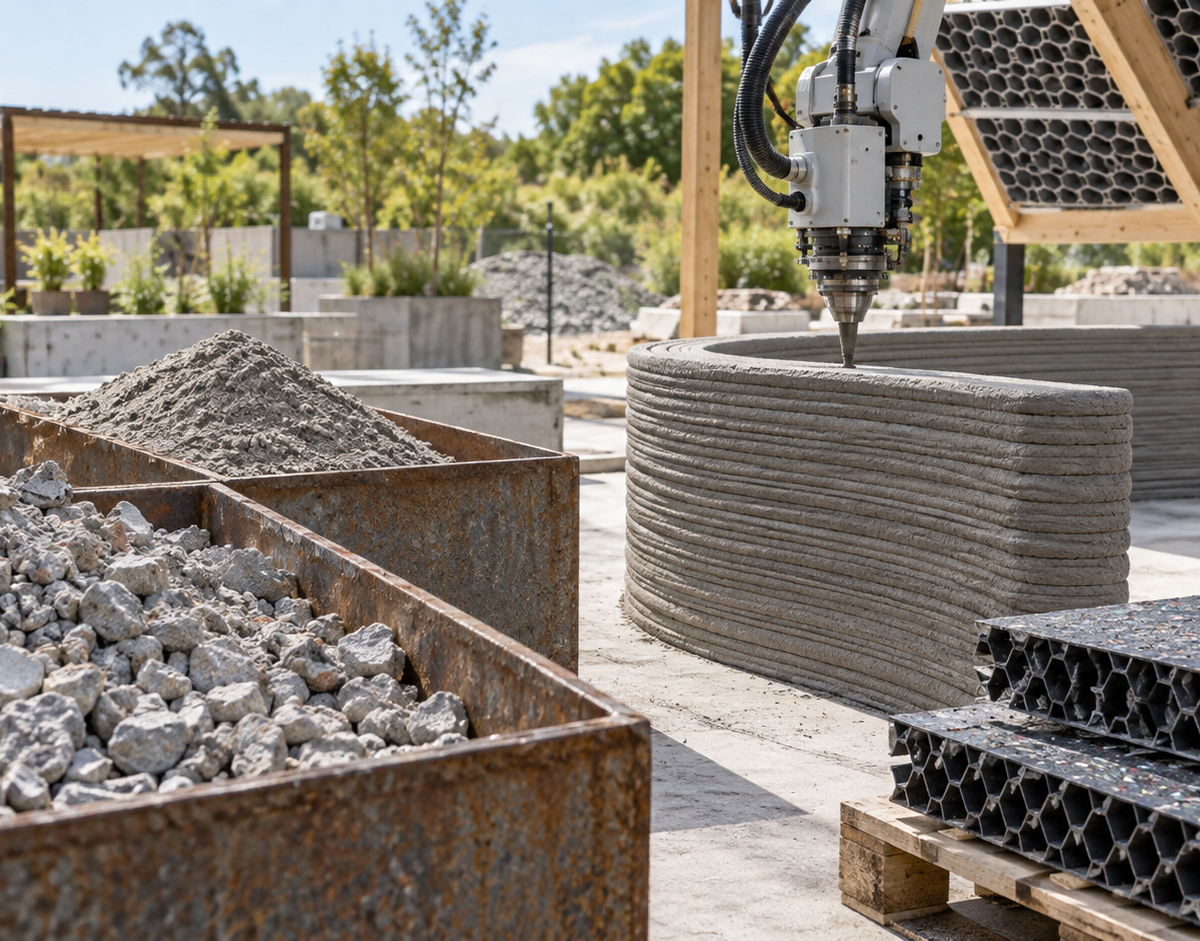
Türkiye’s Ministry of Environment, Urbanization and Climate Change announced on 5 November 2026 that earthquake debris collected in Hatay had been used in a new structure at the COP31 venue in Antalya. Built in the Green Zone, Anka Kuşu, or Phoenix, is intended to illustrate construction-waste reuse and post-earthquake reconstruction. [Source](https://csb.gov.tr/haberler/depremin-enkazi-ile-kurulan-yapi-anka-kusu-307207)
Turning debris into new concrete
According to the ministry, the 140-square-metre structure was created through work under the Rural Areas Earthquake Recovery and Reconstruction Project, known as KADİYAP. The General Directorate of Construction Affairs implements the project with joint financing from the World Bank and the French Development Agency. The structure uses debris collected in Hatay after the earthquakes of 6 February 2023. Some was processed into powder at Hatay’s demolition-waste recycling centre, while another portion became fine sand. These materials were used to produce new concrete before being transported to Antalya. Source
Official source: Republic of Türkiye — Ministry of Environment, Urbanization and Climate Change ↗Concrete printed on site without formwork
The structure’s columns and blocks were built up in layers. A tracked robot used 3D concrete technology without formwork to construct curved walls, seven twisted columns and benches on site, the announcement states. The ministry said concrete printing was completed in seven days. That duration refers specifically to the printing stage, rather than the project’s entire preparation and construction period. The announcement therefore distinguishes the on-site production method from the preceding processing and transportation of recovered materials. Source
Official source: Republic of Türkiye — Ministry of Environment, Urbanization and Climate Change ↗Waste plastic used for roof panels
Honeycomb-patterned panels covering the roof were manufactured from waste plastic. The ministry reported that 33 tonnes of the 54-tonne structure came from earthquake debris. Its account therefore identifies recovered materials in both the concrete components and the roof panels. The structure is presented as a demonstration of construction-waste reuse. This is a project announcement, not the introduction of a regulation, a mandatory recycled-content percentage or an obligation applying across the construction sector. Source
Official source: Republic of Türkiye — Ministry of Environment, Urbanization and Climate Change ↗A platform for resilient-city projects
The ministry said Climate-Resilient Cities would be one of ten priorities on the COP31 Action Agenda. Housing reconstruction undertaken in 11 provinces after the earthquakes will also be presented at the venue. The Green Zone’s Resilient Cities Hub is expected to feature projects from municipalities, relevant public institutions and the private sector. The announcement describes it as a meeting platform where local governments can exchange experience with international actors and develop joint projects. These are announced summit-programme objectives, distinct from the already constructed Phoenix structure. Source
Official source: Republic of Türkiye — Ministry of Environment, Urbanization and Climate Change ↗Related news
KGK sets 13 November deadline for reporting exam applicants missing from lists ↗
Pendik completes first Orta-Dumlupınar phase, with draw for 2,028 units ↗
COP31 plans outline sustainable operations and accessibility ↗