
Global developments · 9 October 2026
Commission finds EU waste battery recycling targets remain appropriate
The Commission’s 11 September report finds no grounds to revise existing recycling efficiency and material recovery targets. The next assessment is due by 18 August 2031.
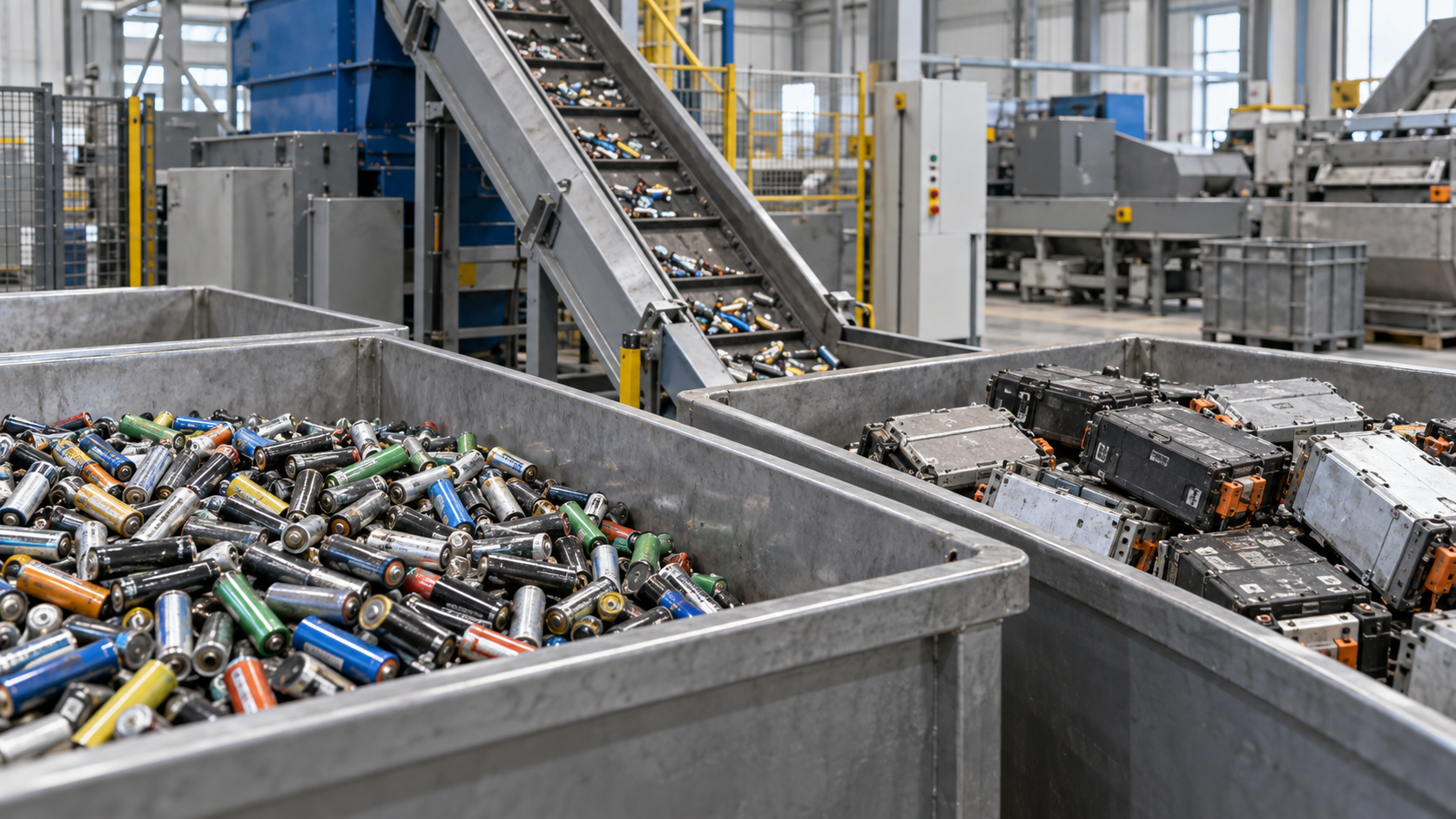
The European Commission adopted a report on 11 September 2026 concluding that recycling efficiency and material recovery targets under the EU Batteries Regulation remain appropriate. Based on the assessment, it sees no grounds to revise them. The announcement concerns a review of existing targets, rather than a measure introducing new ones. [Source](https://environment.ec.europa.eu/news/waste-batteries-recycling-targets-remain-fit-purpose-2026-09-11_en)
What the assessment examined
The review considered whether market developments, technological change, the availability of key raw materials, and scientific and technical progress justified revising the targets. It specifically examined battery technology developments and the existing and forecast availability of cobalt, copper, lead, lithium and nickel. A Joint Research Centre (JRC) technical assessment supported the work. According to the Commission, the targets balance ambition and feasibility, encouraging innovation and investment without overburdening a developing and growing industry. [Source](https://environment.ec.europa.eu/news/waste-batteries-recycling-targets-remain-fit-purpose-2026-09-11_en)
Official source: European Commission — Environment ↗Recycling efficiency thresholds
The existing targets are set out in Parts B and C of Annex XII to Regulation (EU) 2023/1542. By 31 December 2025, recycling efficiency by average weight had to reach at least 75% for lead-acid batteries, 65% for lithium-based batteries, 80% for nickel-cadmium batteries and 50% for other waste batteries. By 31 December 2030, the thresholds rise to 80% for lead-acid batteries and 70% for lithium-based batteries. The announcement does not provide results showing whether the targets have actually been achieved. [Source](https://environment.ec.europa.eu/news/waste-batteries-recycling-targets-remain-fit-purpose-2026-09-11_en)
Official source: European Commission — Environment ↗Two stages for material recovery
Separate thresholds apply to material recovery. By 31 December 2027, all recycling must achieve recovery of at least 90% for cobalt, copper, lead and nickel, and 50% for lithium. By 31 December 2031, these rates increase to 95% for the first four materials and 80% for lithium. This timetable, which the report finds appropriate, reflects targets already established in the regulation, not new percentages proposed through the announcement. [Source](https://environment.ec.europa.eu/news/waste-batteries-recycling-targets-remain-fit-purpose-2026-09-11_en)
Official source: European Commission — Environment ↗Monitoring will continue
The report stresses the need to keep monitoring scientific progress and market developments. According to the Commission, keeping resources in circulation supports a circular and competitive economy and strengthens the resilience of the EU raw material supply chain. Retaining the targets will also support the objectives of the RESourceEU action plan. The regulation requires an assessment of the appropriateness of revising the targets at least every five years, making 18 August 2031 the latest date for the next assessment. [Source](https://environment.ec.europa.eu/news/waste-batteries-recycling-targets-remain-fit-purpose-2026-09-11_en)
Official source: European Commission — Environment ↗Related news
European moth Red List: Nearly 11% of assessed species face extinction risk ↗
EU water assessments expanded as pollution and river-flow pressures persist ↗
EU draft national nature restoration plans move into assessment ↗